
- Investors have a say-do gap, and you have to lead through it. 88% of institutional investors told EY they had increased their use of ESG information, and EY's research has separately tracked 53% of large companies still facing short-term earnings pressure from investors that blocks long-term sustainability investment.
- Credibility is now the scarce asset. 85% of investors say greenwashing is a bigger problem than it was five years ago, and more than half of finance leaders worry their own sustainability reporting looks like it.
- The test is whether you ever turn down revenue. A leadership team that has never declined a contract on sustainability grounds has made an announcement rather than a decision, and everyone downstream can tell the difference.
- Across Africa the binding constraint is capital rather than conviction. Climate finance flowing to the continent rose to USD 43.7 billion a year, and the Climate Policy Initiative estimates it needs to be at least four times that.
- Green skills are the bottleneck, and the gap is widening while boards debate targets. Green hiring grew 7.7% year on year against 4.3% growth in the green-skilled workforce.
Almost every board now agrees that sustainability matters. Very few have worked out what to do in the quarter when it costs them something. That is the whole of sustainable leadership, and it is nothing like the version described in most corporate reports. It is not a values statement, a materiality matrix, or a page in the annual review with a photograph of a solar panel. It is the set of decisions a leadership team makes when the sustainable option is more expensive this year and cheaper over five, and the people funding the business are asking about this year.
In our work with senior leadership teams across East Africa over the past decade, the failure mode we see most is not indifference. It is a well-intentioned sustainability program that never survives contact with the capital allocation meeting. The commitments are real, the reporting improves, and then the first difficult trade-off arrives and the program quietly loses. Nobody cancels it. It just stops being the thing that decides anything.
The evidence on why this happens is unusually clear, and it points somewhere more useful than exhortation.
What Sustainable Leadership Means
Sustainable leadership is the practice of running an organization so that the conditions it depends on, natural, social and financial, are still there in twenty years. It is a decision discipline before it is an environmental position.
Three things distinguish it from ordinary good management. The first is a longer default time horizon, which means being willing to accept a worse number this year for a defensible reason you can state out loud. The second is treating people outside the balance sheet, communities, suppliers, regulators, the water table, as real inputs rather than externalities. The third, and the one most often missing, is the willingness to say no to revenue that the organization has decided it does not want.
That third one is the test. A leadership team that has never turned down a contract on sustainability grounds has not yet made a sustainability decision. It has made a sustainability announcement. The distinction matters because everyone downstream can tell the difference, usually within a quarter.
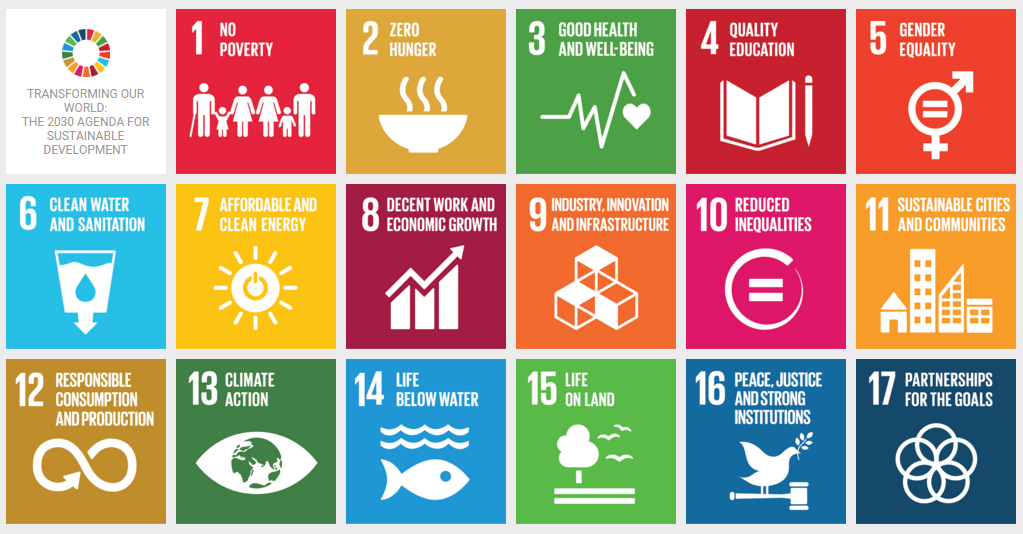
The shared vocabulary for all of this is the UN Sustainable Development Goals, adopted in 2015 with a 2030 horizon. Seventeen goals is too many for any one business to organize around, and treating them as a checklist is how sustainability reporting became a genre of its own. Used properly they do something narrower and more useful: they give a company a common language with its regulators, lenders and customers about which outcomes it is actually accountable for.
The Say-Do Gap in the Capital Markets
The standard argument for sustainable leadership is that investors demand it. That is true, and it is also less helpful than it sounds, because the same investors demand something else at the same time.
EY's 2024 Institutional Investor Survey put the question to 350 investment decision-makers at asset managers, wealth managers, insurers and pension funds. Eighty-eight percent said their institution had somewhat or substantially increased its use of ESG information over the previous year. EY's own 2024 report traces the contradiction back to its 2022 Global Corporate Reporting and Institutional Investor Survey, where 53% of large companies said they faced short-term earnings pressure from investors that impeded their long-term investments in sustainability, a gap EY says has not closed since.
The 88% figure is from EY's Global Institutional Investor Survey 2024. The 53% figure is older, from EY's 2022 Global Corporate Reporting and Institutional Investor Survey, where large companies reported that short-term earnings pressure from investors was impeding exactly the long-term sustainability investment those investors say they want. EY's 2024 report revisits that finding because the pressure has not eased. The demand and the discomfort still come from the same building.
Read those two numbers together and the leadership task changes shape. You are not persuading a market that does not care. You are managing a market that cares on two incompatible timescales and has not resolved the contradiction for you, and nobody is going to. Resolving it, deal by deal, is the job.
The second EY finding is about credibility, and it is the one most leadership teams underrate. Eighty-five percent of the investors surveyed said greenwashing is a greater problem than it was five years ago. More than half of finance leaders in EY's related corporate reporting study said sustainability reporting in their own industry risks being perceived as containing elements of greenwashing. The scarce asset is no longer a target. It is a target anyone believes.
Why Sustainable Leadership Differs in East Africa
Most sustainability writing addresses a company whose main exposure is its own emissions. Across much of Africa the exposure runs the other way. The continent contributes a small share of global emissions and absorbs a large share of the physical consequences, and the constraint on responding is capital.
The Climate Policy Initiative's Landscape of Climate Finance in Africa 2024 tracked annual flows rising from USD 29.5 billion in 2019/20 to USD 43.7 billion in 2021/22. That is real progress, a 48% increase. It is also roughly a quarter of what CPI estimates is needed, which is why the report concludes that flows must rise at least fourfold every year through 2030 to meet what African governments have already committed to.
CPI's Landscape of Climate Finance in Africa 2024 reports that climate finance flows to the continent grew from USD 29.5 billion in 2019/20 to USD 43.7 billion in 2021/22, with annual investment crossing USD 50 billion for the first time in 2022. Multilateral development finance institutions supplied 43% of the total. The report's central conclusion is that current flows need to increase at least four times a year, each year, until 2030.
For a business leader, that gap is not an abstraction. It is why concessional finance is competitive, why lenders increasingly want a disclosure package before they price a facility, and why an organization that can already evidence its environmental and social performance has an advantage over one that cannot.
For listed Kenyan companies the disclosure side of this is already settled, and has been since 2022. What that obligation is and who carries it is the subject of a separate post.
There is a harder regional point underneath. In an economy where a large share of the workforce is in the informal sector, the social half of ESG is not a reporting category. It is the supply chain. A company that cannot say who is in its supply chain three tiers down cannot make a credible social claim, and increasingly cannot make a credible financing claim either.
Where the Financial Case Holds
The financial argument for sustainability is often oversold, which has done the field real damage. Some parts of it hold up. Others do not.
The parts that hold up are the ones with a direct operational mechanism. Energy and materials efficiency cuts cost, and in a region where many businesses run generators through grid interruptions, the payback periods are shorter than in Europe. Waste reduction does the same. Water security is a genuine continuity risk for anyone in agriculture, brewing or manufacturing. Retaining staff cuts what a company spends on recruitment, and concessional or blended finance brings down the cost of capital itself. Each of these can be modeled, and each survives an audit.
The parts that do not hold up as well are the broad correlations between an ESG rating and share price. Ratings disagree with each other, methodologies change, and the direction of causation is genuinely contested. Research such as NYU Stern's work on how to quantify sustainability's impact on the bottom line is useful precisely because it insists on tracing the mediating factors, innovation, operational efficiency, risk reduction, retention, loyalty, rather than asserting a headline correlation and moving on.
Build your business case out of the first list. If your board paper leans on the second, someone in the room will take it apart, and they will be right to.
Need a leadership team that can hold a long time horizon under pressure?
Our Leadership & Management Development program works with executives on the decision disciplines sustainability actually depends on: weighing trade-offs, holding difficult conversations with investors and regulators, and governance that survives a bad quarter. Book a free strategy call.
Embedding Sustainability in Business Decisions
A sustainability commitment that lives in one department will lose every contested decision, because the department that owns it does not own the budget. Four structural moves change that, and none of them are cultural.
1. Build it into capital allocation
If sustainability criteria are a separate review that happens after the investment case is written, they function as a veto that is never used. Put the criteria in the template. A project that cannot answer them is not ready for the committee.
2. Give one executive the trade-off
Sustainability officers are usually given the topic and denied the trade-off, which makes the role advocacy rather than management. The person accountable for the target needs authority over at least one budget line that the target depends on. Otherwise you have appointed a spokesperson.
3. Measure a few things that matter
Long lists of indicators are a way of avoiding accountability for any of them. Three or four measures that the CEO reports on personally will move an organization further than forty in an appendix.
4. Say what you will not do
Publish the boundary. A stated position on the customers, materials or practices the business has ruled out is far harder to walk back than a target for 2035, and it tells your own staff what the commitment is worth when it costs something.
The Green Skills Shortage
The quiet constraint on all of this is people. LinkedIn's Global Green Skills Report 2025 found green hiring growing 7.7% year on year while the share of the workforce with green skills grew 4.3%. Demand is outrunning supply, and the hiring rate for workers in the green talent pool now runs 46.6% above the global workforce average.
LinkedIn's Global Green Skills Report 2025 found that hiring for green talent grew 7.7% year on year against 4.3% growth in the green-skilled workforce, and that more than half of green-skilled hires went into roles without a green job title. The capability is being absorbed into ordinary jobs faster than it is being created, which makes internal development the realistic route for most employers rather than recruitment.
That last detail is the one to act on. If the majority of green-skilled hiring is happening in roles that are not labeled green, then the capability your organization needs is not a sustainability department. It is a finance manager who can price carbon exposure, a procurement lead who can audit a supplier, and an operations manager who understands energy. Those are development problems, and the market for buying them ready-made is tight and getting tighter.
Three Common Sustainability Program Failures
The reporting trap
The program becomes a disclosure exercise, staffed by people who are good at reports, measuring things because they are measurable rather than because they matter. It produces an excellent document and changes nothing. You can spot it by asking which operating decision was made differently last year because of it.
The moral-framing trap
Sustainability gets argued entirely as a duty. That works on the people who already agree and hardens everyone else, and it leaves the program undefended the moment margins tighten, because a duty has no answer to a cash flow problem. The commitments that survive are the ones with an operational and financial mechanism attached.
The single-champion trap
One passionate executive carries the whole agenda, and it leaves with them. If you cannot name three people who would keep the program running after your head of sustainability resigns, you do not have a program, you have a person.
Frequently Asked Questions
What is sustainable leadership?
It is the practice of running an organization so that the natural, social and financial conditions it depends on still exist in twenty years. Three things distinguish it from ordinary good management: a longer default time horizon, treating stakeholders outside the balance sheet as real inputs rather than externalities, and a willingness to turn down revenue the organization has decided it does not want.
How is sustainable leadership different from ESG reporting?
ESG reporting is disclosure, and it is possible to do it well while changing nothing. Sustainable leadership is a decision discipline. The test is to ask which operating decision was made differently in the last year because of the sustainability program. If nobody can name one, the organization has a reporting function rather than a leadership position.
What does sustainable leadership cost an organization in practice?
Usually not a large capital sum. It costs optionality. The real price is a slower approval on a project that fails a sustainability criterion, a supplier relationship ended over an audit finding, and occasionally a contract declined outright. Those are the costs that show up in a quarter, which is why programs framed purely as a duty tend to lose the first time margins tighten.
Does sustainability actually improve financial performance?
Parts of the case hold up well and parts do not. The claims with a direct operational mechanism are reliable: energy and materials efficiency, waste reduction, water security, lower turnover, and improved access to concessional or blended finance. Broad correlations between an ESG rating and share price are much weaker, because rating methodologies disagree with each other and the direction of causation is contested. Build the business case from the first list.
Who should own sustainability in a leadership team?
Whoever owns the trade-off, not whoever owns the topic. A sustainability lead given the subject but no authority over any budget line the target depends on is functioning as an advocate rather than a manager. Put the sustainability criteria into the capital allocation template rather than running them as a separate review, which in practice becomes a veto nobody ever uses.
What green skills do organizations most need?
Mostly not the ones in a sustainability department. LinkedIn's Global Green Skills Report 2025 found green hiring growing 7.7% year on year against 4.3% growth in the green-skilled workforce, with more than half of green-skilled hires going into roles without a green job title. The capability organizations need is a finance manager who can price carbon exposure, a procurement lead who can audit a supplier, and an operations manager who understands energy.
Conclusion
Sustainable leadership is ordinary leadership held to a longer time horizon, under pressure from people who will reward you for both horizons and never tell you which one they meant. The organizations that manage it are the ones that moved the criteria into the process where money gets decided, and accepted that they would sometimes lose revenue on purpose. That decision gets minuted, or it did not happen.
When was the last time your organization turned down money for a reason it was willing to state publicly?
If you are building the leadership capability to make those calls consistently, our Leadership and Management Development program is designed for it. Book a free strategy call and we will map out what your team needs.