

- Investors want sustainability and short-term results at the same time. 88% of institutional investors told EY they had increased their use of ESG information, yet in EY's 2022 survey 53% of large companies said investor pressure for short-term earnings was holding back their long-term sustainability investment. EY says that gap has not closed.
- A target investors believe is now the scarce asset. 85% of investors say greenwashing is a bigger problem than it was five years ago, and more than half of finance leaders say sustainability reporting in their own industry risks looking like greenwashing.
- The test is whether you ever turn down revenue. A leadership team that has never declined a contract on sustainability grounds has made an announcement, not a decision, and its staff and partners can tell the difference.
- Build the business case on savings you can measure. Lower energy, waste and staff turnover costs, a secure water supply and cheaper finance hold up under audit. Claims that a better ESG rating lifts the share price are much weaker.
- Across Africa, the main obstacle is money, not willingness. Climate finance reaching the continent averaged USD 43.7 billion a year in 2021/22, and the Climate Policy Initiative estimates it needs to be at least four times higher every year through 2030.
- Green skills are scarce, so plan to develop them in-house. Green hiring grew 7.7% year on year while the share of workers with green skills grew only 4.3%, and most green-skilled hires now go into ordinary jobs rather than sustainability roles.
Almost every board now agrees that sustainability matters. Very few have worked out what to do when it actually costs them money. That is the whole of sustainable leadership, and it is nothing like the version described in most corporate reports. It is not a values statement, a materiality matrix, or a page in the annual review with a photograph of a solar panel. It is what a leadership team decides when the sustainable option costs more this year and saves money over the next five, while the people funding the business only want to hear about this year.
In our work with senior leadership teams across East Africa over the past decade, the most common failure we see is not indifference. It is a well-intentioned sustainability program that gets dropped the moment it has to compete for budget. The commitments are real, the reporting improves, and then the first difficult trade-off arrives and the program quietly loses. Nobody cancels it. It just stops being the thing that decides anything.
The evidence on why this happens is unusually clear. This article looks at the mixed signals investors send, why the picture is different in East Africa, which financial benefits actually hold up, and the practical changes that keep sustainability in the room when budgets are set.
What Sustainable Leadership Means
Sustainable leadership is the practice of running an organization so that the natural, social and financial conditions it depends on are still there in twenty years. It is first a way of making decisions, and only second a position on the environment.
Three things set it apart from ordinary good management:
- A longer time horizon. Leaders will accept a weaker result this year, as long as they can explain the reason openly.
- Counting what sits outside the balance sheet. Communities, suppliers, regulators and the local water supply are treated as real inputs to the business, not as side effects someone else pays for.
- Saying no to the wrong revenue. The organization is willing to turn down business it has decided it does not want. This is the one most often missing.
That third one is the test. A leadership team that has never turned down a contract on sustainability grounds has not yet made a sustainability decision. It has made a sustainability announcement. The distinction matters because staff, suppliers and partners can tell the difference, usually within a few months.
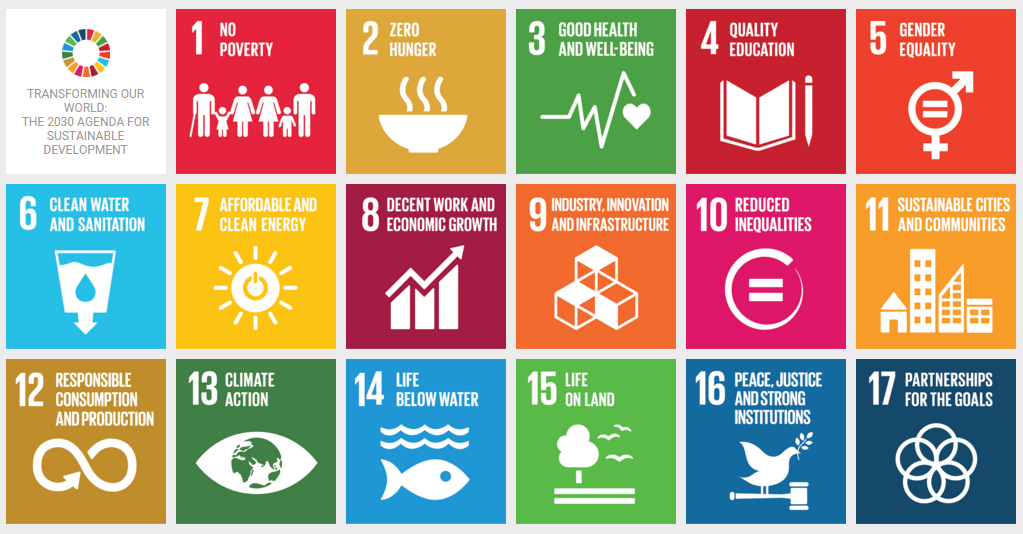
The shared vocabulary for all of this is the UN Sustainable Development Goals, adopted in 2015 with a 2030 horizon. Seventeen goals is too many for any one business to organize around, and treating them as a checklist is how sustainability reports turned into box-ticking exercises. Used well, they do something narrower and more useful: they give a company and its regulators, lenders and customers the same terms for agreeing on which results the company is actually responsible for.
Why Investors Send Mixed Signals on Sustainability
The standard argument for sustainable leadership is that investors demand it. That is true, and it is also less helpful than it sounds, because the same investors demand something else at the same time.
EY's 2024 Institutional Investor Survey put the question to 350 investment decision-makers at asset managers, wealth managers, insurers and pension funds. Eighty-eight percent said their institution had somewhat or substantially increased its use of ESG information over the previous year. EY's 2024 report also points back to its 2022 Global Corporate Reporting and Institutional Investor Survey, where 53% of large companies said they faced short-term earnings pressure from investors that impeded their long-term investments in sustainability, a gap EY says has not closed since.
The same EY survey shows how the contradiction plays out. 92% of investors agreed that the risk to near-term performance outweighs the long-term benefits of many ESG-related investments, and 66% said their institution is likely to decrease its consideration of ESG in decision-making. Investors are using more ESG information while preparing to weigh it less.
Read those two numbers together and the leadership task changes shape. You are not persuading a market that does not care. You are dealing with investors who care about sustainability over the long term and about earnings this year, and who have not decided which matters more. Nobody is going to decide it for you. Leaders have to settle it themselves, one deal at a time.
Another EY finding is about credibility, and it is the one most leadership teams underrate. Eighty-five percent of the investors surveyed said greenwashing is a greater problem than it was five years ago. More than half of finance leaders in EY's related corporate reporting study said sustainability reporting in their own industry risks being perceived as containing elements of greenwashing. Setting a sustainability target is easy. What is now rare, and valuable, is a target that investors actually believe.
Why Sustainable Leadership Differs in East Africa
Most sustainability writing assumes a company's main concern is the emissions it produces. Across much of Africa the concern runs the other way. The continent produces a small share of global emissions but suffers a large share of the droughts, floods and heat that follow, and the main obstacle to responding is money.
The Climate Policy Initiative's Landscape of Climate Finance in Africa 2024 measured how much climate finance reaches Africa each year: public and private money for cutting emissions and for adapting to climate change. The yearly total rose from an average of USD 29.5 billion in 2019/20 to USD 43.7 billion in 2021/22, a 48% increase. That is real progress, but it is not close to enough. CPI estimates the yearly total needs to be at least four times higher, every year through 2030, to pay for the climate plans African governments have already committed to.
Annual Climate Finance Flows to Africa, 2019/20 and 2021/22
In USD billions. Source: Climate Policy Initiative, Landscape of Climate Finance in Africa 2024
Flows rose by USD 14.2 billion, or 48%, between the two periods. CPI estimates yearly flows need to be at least four times higher, every year to 2030, to meet stated national commitments.
Values are two-year averages, which CPI uses to smooth annual fluctuation, not single-year totals.
Most of that money is public. CPI finds that governments, development banks and other public sources provided 82% of Africa's climate finance in 2021/22, leaving USD 8 billion from private investors. Adaptation, the spending that helps communities and businesses cope with climate change, received 32% of all climate finance but only 9% of private money. Private investors put most of theirs into mitigation, meaning cutting emissions. So the spending that protects businesses from climate shocks is the part private capital funds least.
Source: Climate Policy Initiative, Landscape of Climate Finance in Africa 2024
For a business leader, this funding gap has practical consequences. Concessional finance, meaning loans on better terms than the market offers, is hard to win because so many organizations are chasing it. Lenders increasingly want to see sustainability disclosures before they set the terms of a loan. And an organization that can already show evidence of its environmental and social performance has an advantage over one that cannot.
For companies listed on the Nairobi Securities Exchange, disclosure is not optional: the exchange has expected ESG reporting in their annual reports since 2022. What that involves, and who in the company is answerable for it, is covered in a separate post.
There is a harder regional point underneath. Across much of East Africa, a large share of the workforce is in the informal sector, and many of those workers sit somewhere in a formal company's supply chain: smallholder farmers, transporters, casual laborers. So the social side of ESG is not just a section to fill in at reporting time. It is a question about who actually grows, makes and moves the company's products. A company that cannot say who is in its supply chain three tiers down cannot make a credible social claim, and increasingly cannot make a credible financing claim either.
Which Financial Benefits of Sustainability Hold Up
The financial argument for sustainability is often oversold, which has done the field real damage. Some parts of it hold up. Others do not.
The benefits that hold up are the ones where a sustainability measure saves or protects money in a way you can trace directly:
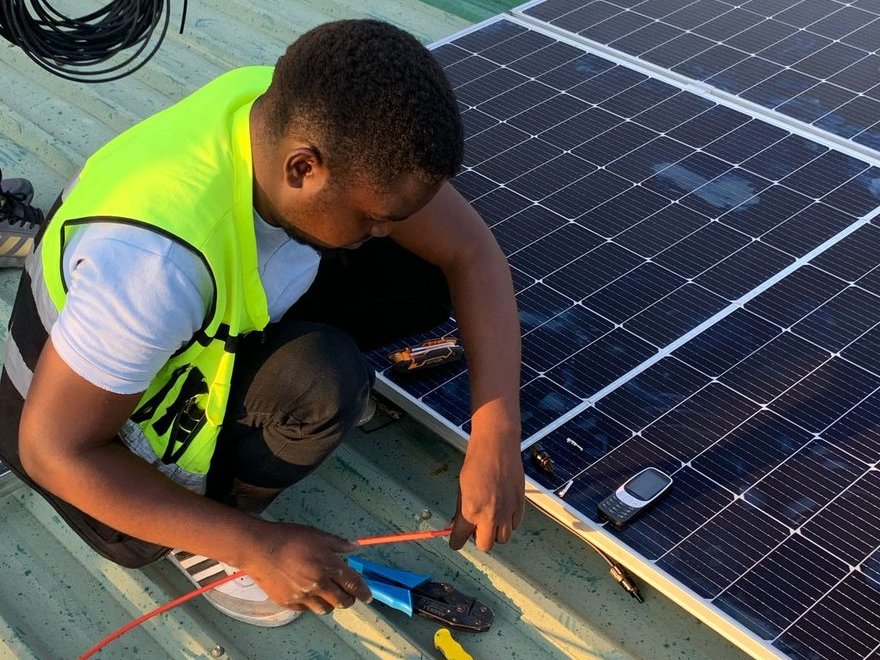
- Lower energy, materials and waste costs. Using less energy and fewer materials, and throwing less away, cuts costs. In a region where many businesses run generators through power cuts, energy savings pay back faster than they do in Europe.
- A secure water supply. For anyone in agriculture, brewing or manufacturing, running short of water is a real threat to keeping the business running.
- Lower staff turnover. Keeping people longer cuts what a company spends on recruitment.
- Cheaper finance. Concessional or blended finance, which mixes public or donor money with private investment, lowers what a company pays to borrow.
Each of these can be put into numbers, and each will stand up when an auditor checks it.
The benefits that hold up less well are the broad claims that a better ESG rating leads to a higher share price. Those claims have three weaknesses:
- Ratings disagree. Different rating agencies often score the same company very differently.
- Methods change. Agencies revise how they score, so a company's rating can shift even when its practices have not.
- Cause and effect are unclear. It is still debated whether good sustainability raises the share price, or whether successful companies simply have more to spend on sustainability.
That is why research such as NYU Stern's work on how to quantify sustainability's impact on the bottom line is useful. Rather than pointing to a headline correlation, it traces the specific routes by which sustainability affects profit: innovation, operational efficiency, risk reduction, staff retention and customer loyalty.
So build your business case on the first set of benefits, the savings and risks you can measure directly. If your board paper relies on ESG ratings and share-price correlations instead, someone in the room will pick it apart, and they will be right to.
Need a sustainability strategy that holds up in the budget meeting?
Our Strategic Planning program helps leadership teams build sustainability into their strategy: deciding which issues matter most to the business, giving each one a clear owner, and producing reporting that holds up to independent scrutiny. Request a proposal.
Embedding Sustainability in Business Decisions
A sustainability commitment that lives in one department will lose every contested decision, because the department that owns it does not own the budget. Four changes to how decisions are made fix that. None of them depend on changing the culture first.
1. Build it into investment decisions
When sustainability is checked in a separate review after the investment case has already been written, that review almost never stops a project. Instead, put the sustainability questions into the investment proposal template itself. A project that cannot answer them is not ready to go to the investment committee.
2. Give one executive real budget authority
Sustainability officers are usually made responsible for the topic but given no power over the spending decisions that affect it, so they end up arguing for sustainability rather than managing it. The person accountable for a sustainability target needs control of at least one budget line that the target depends on. Otherwise you have appointed a spokesperson, not a manager.
3. Measure a few things that matter
Long lists of indicators are a way of avoiding accountability for any of them. Three or four measures that the CEO reports on personally will move an organization further than forty in an appendix.
4. Say what you will not do
Publish the customers, materials or practices the business has ruled out. A public position like that is far harder to walk back than a target for 2035, and it tells your own staff what the commitment is worth when it costs something.
The Green Skills Shortage
The quiet constraint on all of this is people. Green skills are the skills that help an organization reduce its environmental impact, from renewable energy engineering to sustainable procurement. LinkedIn's Global Green Skills Report 2025 found that green hiring, meaning the hiring of workers with these skills, grew 7.7% year on year, while the share of the workforce that has them grew only 4.3%. Demand is outrunning supply: workers with green skills are now hired at a rate 46.6% higher than the global workforce average.
The skills are spreading faster than the job titles. LinkedIn found that, for the first time, workers with green skills in jobs that could traditionally be done without them make up more than half of all green hires. Most of the green capability being hired is going into roles nobody would label green.
Source: LinkedIn Economic Graph, Global Green Skills Report 2025
The finding to act on is that most green-skilled people are now hired into ordinary jobs, not sustainability roles. So the capability your organization needs is not a bigger sustainability department. It is a finance manager who can put a price on carbon exposure, a procurement lead who can audit a supplier, and an operations manager who understands energy use. You will mostly have to develop these people from within, because hiring them ready-made is already hard and getting harder.
Three Common Sustainability Program Failures
The reporting trap
The program becomes a disclosure exercise, staffed by people who are good at reports, measuring things because they are measurable rather than because they matter. It produces an excellent document and changes nothing. You can spot it by asking which operating decision was made differently last year because of it.
The moral-framing trap
Sustainability gets argued entirely as a duty. That works on the people who already agree and puts everyone else on the defensive, and it leaves the program undefended the moment margins tighten, because a duty has no answer to a cash flow problem. The commitments that survive are the ones tied to a clear cost saving or financial benefit.
The single-champion trap
One passionate executive carries the whole agenda, and it leaves with them. If you cannot name three people who would keep the program running after your head of sustainability resigns, you do not have a program, you have a person.
Frequently Asked Questions
What is sustainable leadership?
It is the practice of running an organization so that the natural, social and financial conditions it depends on are still there in twenty years. Three things set it apart from ordinary good management: a longer time horizon, treating communities, suppliers, regulators and natural resources as real inputs to the business rather than side effects someone else pays for, and a willingness to turn down revenue the organization has decided it does not want.
How is sustainable leadership different from ESG reporting?
ESG reporting is disclosure, and it is possible to do it well while changing nothing. Sustainable leadership is a way of making decisions. The test is to ask which business decision was made differently in the last year because of the sustainability program. If nobody can name one, the organization has a reporting function, not a leadership position.
What does sustainable leadership cost an organization in practice?
Usually not a large sum of money up front. The real cost is giving up some short-term options: a project approved more slowly because it fails a sustainability test, a supplier dropped after a poor audit, and occasionally a contract turned down outright. Those costs land this year while the benefits arrive later, which is why programs treated purely as a duty tend to be dropped the first time margins tighten.
Does sustainability actually improve financial performance?
Some of the benefits hold up well and some do not. The reliable ones have a direct, measurable link to cost or risk: lower energy, materials and waste costs, a secure water supply, lower staff turnover, and cheaper concessional or blended finance. Broad claims that a better ESG rating raises the share price are much weaker, because rating agencies disagree with each other, their methods change, and cause and effect are unclear. Build the business case on the measurable benefits.
Who should own sustainability in a leadership team?
An executive with real budget authority, not just responsibility for the topic. A sustainability lead who controls no budget line the target depends on can argue for sustainability but cannot manage it. It also helps to put the sustainability questions into the investment proposal template itself, rather than running a separate review that rarely stops a project.
What green skills do organizations most need?
Mostly not specialist sustainability roles. Green skills are the skills that help an organization reduce its environmental impact. LinkedIn's Global Green Skills Report 2025 found green hiring growing 7.7% year on year against 4.3% growth in the share of workers with green skills, and more than half of green-skilled hires now go into jobs not traditionally considered green. What most organizations need is a finance manager who can price carbon exposure, a procurement lead who can audit a supplier, and an operations manager who understands energy use.
Conclusion
Sustainable leadership is ordinary leadership with a longer time horizon, practiced under pressure from investors who reward both long-term and short-term results and never say which matters more. The organizations that manage it are the ones that built sustainability into the decisions where budgets are set, and accepted that they would sometimes lose revenue on purpose. They also record those decisions formally, in board or committee minutes, because a decision nobody wrote down is easy to quietly reverse.
When was the last time your organization turned down money for a reason it was willing to state publicly?
If you are building the leadership capability to make those calls consistently, our Leadership and Organizational Change Management program is designed for it. Request a proposal and we will map out what your team needs.